







October to February is the best time to garden in Kolkata because the city finally gets what most plants want: dry air, steady sunshine, cool nights and far fewer pests. Night temperatures fall to roughly 13°C in January while days stay in the mid-20s, so flowers, leafy greens and winter vegetables grow quickly without heat stress or monsoon rot.
The catch is that this window is short. Genuinely cool weather lasts only about ten to twelve weeks, and the heat starts creeping back by late February. Gardeners who plant in October and November get the full show; those who start after Christmas often watch their seedlings bolt or fade just as they begin to flower.
The season at a glance
- October: clear up after the rains, refresh the soil, prune roses and start seed trays.
- November: the main planting month for winter flowers, vegetables and herbs.
- December: steady growth, lighter watering, first blooms and the first leafy harvests.
- January: peak flowering and harvest, with the coldest and foggiest mornings of the year.
- February: final harvests, seed saving and getting pots ready for summer.
Why is October to February the best growing season in Kolkata?
For most of the year, gardening here is a contest with the climate. April and May bake rooftops, while June to September brings waterlogged pots, fungal rot, mosquitoes and mealybugs. The post-monsoon months lift nearly all of these pressures at once.
Rainfall drops sharply once the monsoon withdraws in October, and November through February are usually close to dry. Humidity eases, so leaves stay dry long enough to resist mildew. The gap between day and night temperatures widens to around 10–12°C, which is exactly the signal many flowering annuals need to set buds. Sunlight is softer than in summer but far more reliable, with long runs of clear days.
Bengal’s winter is also mild enough that nothing freezes. That makes it ideal for cool-season annuals and vegetables, but not for plants that need real cold. Tulips, hyacinths, cyclamen and most hill-station bulbs will not perform on a city balcony however carefully they are tended, so it pays to choose varieties bred for the plains.
What should you do in each month of the season?
October: recover from the monsoon and prepare
October is a preparation month rather than a planting rush. Late showers and the occasional depression from the Bay of Bengal can still arrive around Durga Puja, so keep tender seedlings under a shade net or a covered ledge until the weather settles.
- Remove rotten roots, dead growth and soggy soil left behind by the rains.
- Repot or top-dress containers with a fresh mix (covered in the soil section below).
- Prune roses towards the end of the month so they push fresh shoots for a strong flush of blooms.
- Sow marigold, calendula, petunia, dianthus, tomato and chilli seeds in trays for transplanting in November.
- Plant dahlia tubers or rooted cuttings in deep pots.
- If you keep a poinsettia, give it uninterrupted darkness every night from October onward. Even a balcony bulb or streetlamp can stop its bracts from colouring.
November: the main planting month
November is the busiest and most rewarding month. Nights cool steadily, the sky clears, and almost anything planted now has a full run of mild weather ahead of it. Transplant October seedlings, bring home nursery-grown flowering plants and sow quick crops straight into pots.
It is also the right time to settle in perennials that peak in the cool months, such as roses, chrysanthemums (chandramallika) and kalanchoe, because they get a few weeks to establish before blooming. If time is short, buying established plants instead of sowing seed gains you four to six weeks.
December: steady growth and the first blooms
Growth stays strong through December, but plants drink less as the days shorten. Cut back watering, feed every three to four weeks with vermicompost or a mild liquid fertiliser, and pinch the tips of marigolds and petunias to make them bushier. The first palong and dhonepata harvests usually arrive now, and Christmas brings poinsettias and Christmas cactus into colour.
January: peak bloom and harvest
January is the coldest month, with misty mornings and the lowest night temperatures of the year. Balconies and terraces look their best: dahlias, chrysanthemums, calendula and roses tend to bloom together, and the vegetable pots reach harvest size. Marigolds are in demand for Saraswati Puja in late January or early February, so a few pots of genda sown in October pay off handsomely.
Keep an eye out for aphids and powdery mildew, both of which enjoy still, dewy mornings (see the pest section below).
February: harvest, save seed and plan ahead
By mid-February, warm afternoons return and cool-season annuals begin to tire. Harvest the last cauliflowers and carrots, let a few marigold, calendula and coriander plants set seed for next year, and deadhead flowers to stretch the display. Towards the end of the month, turn your attention to heat-tolerant summer plants and add mulch to pots that will face the April sun.
Which flowers grow best in a Kolkata winter?
The most dependable cool-weather blooms for the city are light-loving annuals that finish their life cycle before March, plus a handful of perennials whose blooming is triggered by cool nights or short days.
Easy annuals for beginners
- Marigold (genda): the toughest choice; it blooms within about eight to ten weeks of sowing and keeps going until March.
- Calendula: cheerful orange and yellow blooms that tolerate partial shade.
- Petunia: ideal for hanging baskets and railing planters, provided it gets five or more hours of direct sun.
- Dianthus, phlox and sweet alyssum: compact plants for edging and small pots.
- Nasturtium: happy in poor soil, and its blossoms are edible.
Showpiece plants worth the effort
- Dahlia: the classic Bengal cold-weather bloom; give it a deep pot, a stake and full sun.
- Chrysanthemum (chandramallika): buy budded plants in November for a December–January display.
- Pansy and sweet pea: possible here, but only with an October start and the brightest spot you have, and both fade fast once February warms up.
Perennials at their best now
Several long-lived plants put on their best show in these months. A hardy desi red rose pruned in October flowers freely from December onward. A pink poinsettia colours up for Christmas when it gets long, dark nights, and it can stay outdoors through to February because nights rarely fall below about 10°C; just shelter it from strong wind. The Christmas cactus blooming season runs through the same short days, while pink kalanchoe follows in February and suits a small, bright windowsill. Our range of flowering plants for the winter season gathers more bloomers that cope with the plains.
Which vegetables and herbs can you grow on a Kolkata terrace in winter?
These months are the one stretch when a small terrace or balcony can genuinely feed a household. Leafy greens are the quickest win, root crops need deeper containers, and fruiting crops such as tomatoes need the most sun.
Fast leafy greens (ready in three to six weeks)
- Palong shak (spinach), methi (fenugreek) and sorshe shak (mustard greens), sown directly into wide, shallow pots.
- Dhonepata (coriander), sown every two to three weeks for a continuous supply.
- Lettuce, which tolerates part shade better than most cool-season crops.
Root crops (need 10–12 inches of soil)
- Mooli (radish), the fastest root at roughly 30–45 days.
- Carrot and beetroot, which need loose, stone-free soil to grow straight.
Fruiting and flowering vegetables (need six or more hours of sun)
- Tomato, chilli and brinjal: transplant seedlings in November into 12–15 inch pots.
- Cauliflower (fulkopi) and cabbage (badhakopi): one plant per large pot or grow bag, ideally from nursery seedlings rather than late-sown seed.
- Peas (motorshuti): sow in October or November beside a trellis or railing.
Herbs
A potted mint plant grows lush in cool weather and bounces back quickly after cutting. Tulsi slows down in January, so pinch off its flower spikes (manjari) to keep it leafy. These and other aromatic herbs that grow well in pots make good companions for a kitchen-garden corner.
How should you prepare pots and soil after the monsoon?
Four months of rain wash nutrients out of container soil and pack it down, so most pots need a refresh before the winter crop goes in.
- Check drainage: clear blocked holes and add a layer of broken terracotta or coarse gravel at the base.
- Loosen or replace tired soil. A dependable mix is roughly equal parts garden soil, well-rotted compost or vermicompost, and coarse sand or cocopeat.
- Spread the mix in the October sun for a few days before planting to dry it out and reduce fungal spores.
- Work in a handful of neem cake per large pot to discourage soil pests.
- Avoid fresh cow dung; only fully decomposed manure is safe around young roots.
Grow bags suit terraces well because they are light and drain freely, which matters on older rooftops where load is a concern.
How much sun and water do plants need in a Kolkata winter?
Most cool-season flowers and vegetables need at least five to six hours of direct sun. In these months daylight tracks low across the southern sky, so south- and east-facing balconies receive the most light, while north-facing ones may get almost none from November to January. Neighbouring high-rises in areas such as Salt Lake and New Town also cast long shadows at this time of year, so watch where the light actually falls for a few days before deciding what to grow.
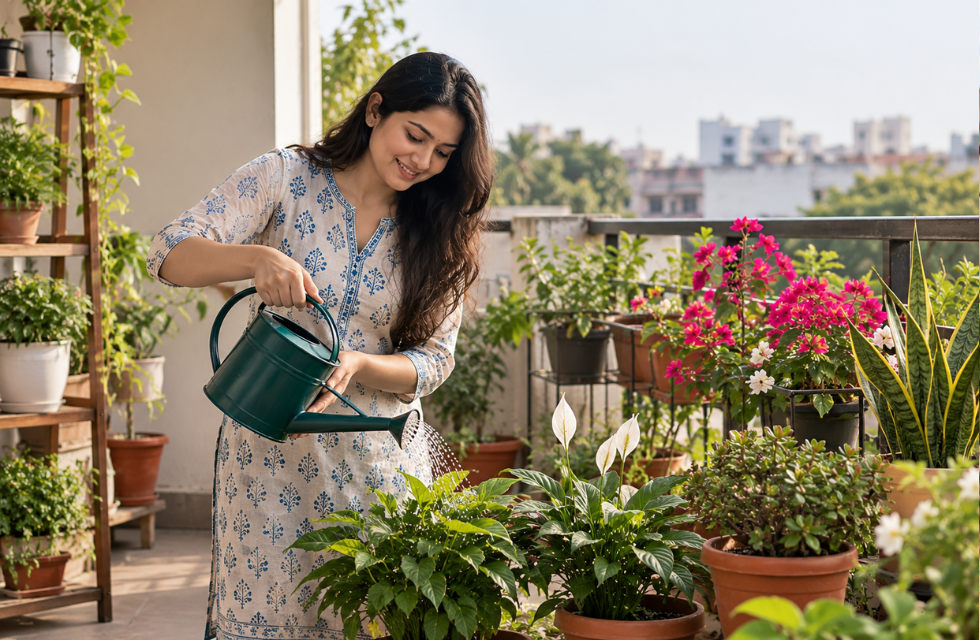
Water less often than in summer, but water deeply. Push a finger an inch into the soil and water only when it feels dry. Morning watering lets leaves dry by afternoon, whereas evening watering in cool, still air invites mildew and damping-off. Pots on an open terrace dry out faster than those on a covered balcony, so check them separately.
If your space gets only partial light, balcony plants that cope with a few hours of direct light are a safer bet than light-hungry annuals, which belong among plants suited to an open terrace garden. Indoor foliage follows a different rhythm altogether, and how houseplants should be looked after through the monsoon, the summer and the colder weeks is covered in our separate seasonal guide.
Which pests and problems appear in a Kolkata winter garden?
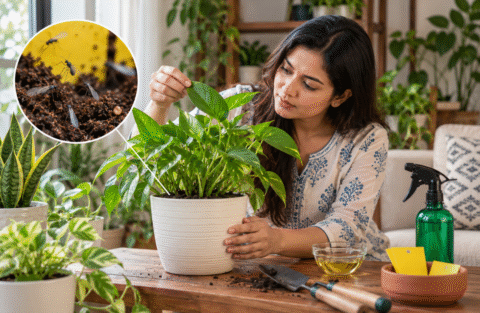
Dry weather means fewer pests overall, but a few do well in cool, still air.
- Aphids: tiny green or black insects clustering on new growth of mustard, marigold, roses and chrysanthemums. Spray diluted neem oil with a few drops of liquid soap every five to seven days.
- Whitefly and mealybug: check leaf undersides weekly and wipe off early colonies.
- Powdery mildew: a white, dusty coating on peas, roses and zinnias, encouraged by dew and poor airflow. Space pots apart and remove affected leaves.
- Damping-off: seedlings collapse at the soil line. Use a clean mix, water trays from below and avoid keeping them soggy.
- Leaf miners: wavy pale tunnels in tomato and bean leaves; pick off affected leaves promptly.
Air quality across the city also tends to worsen in winter, and fine dust settling on leaves cuts the light they can use. A gentle rinse of the foliage every week or two keeps plants working at full strength.
What mistakes should you avoid this season?
- Starting late. Slow crops sown in late December rarely mature before the February warm-up.
- Cool soil dries slowly, and soggy pots cause most winter losses.
- Buying cold-climate plants. Tulips, cyclamen and similar hill-station species need temperatures Bengal simply does not provide.
- Too much fertiliser produces leaves instead of flowers on marigolds, petunias and tomatoes.
- Ignoring light. A plant that gets three hours of sun will survive, but it will not flower well.
Ready to plant your winter garden?
If you would rather begin with established plants than seed trays, everything about buying plants online in Kolkata, from delivery to aftercare, is gathered in one place. The live plants we raise and ship across India are grown at Plantaeroot’s Rishra and Joka nurseries, so they are already used to Bengal’s seasons when they reach your balcony.
Frequently asked questions
October and early November are the best months to start. The monsoon has withdrawn, the soil is easy to work, and seedlings planted now have three to four mild months to grow and flower before the heat returns in March.
Marigold, calendula, petunia, dahlia, chrysanthemum, dianthus, sweet alyssum and roses all bloom through the cool season. Poinsettia and Christmas cactus colour up around December, and kalanchoe flowers in February. Most need five or more hours of direct sun.
Yes. Spinach, coriander, methi, mustard greens, radish and lettuce grow well in pots, and most are ready to harvest in three to six weeks. Tomatoes, cauliflower and peas also succeed if the balcony gets at least six hours of direct light.
Yes. Nights in southern Bengal rarely drop below about 10°C, so a poinsettia can stay outside all season. Give it bright daylight, shelter from strong wind and complete darkness at night so that its bracts colour fully.
Water only when the top inch of soil feels dry, which usually means every two to four days for pots in full sun and less often for shaded ones. Water in the morning, and reduce the amount further in January, when evaporation is at its lowest.
It is not too late for fast crops like spinach, coriander and radish, or for buying established flowering plants. Slow crops such as cauliflower, dahlia and carrots sown from seed in December are unlikely to mature before the February warm-up.